Proofreading jobs in Nigeria: how to get paid to fix words
By the Hawkit New team · · 5 min read
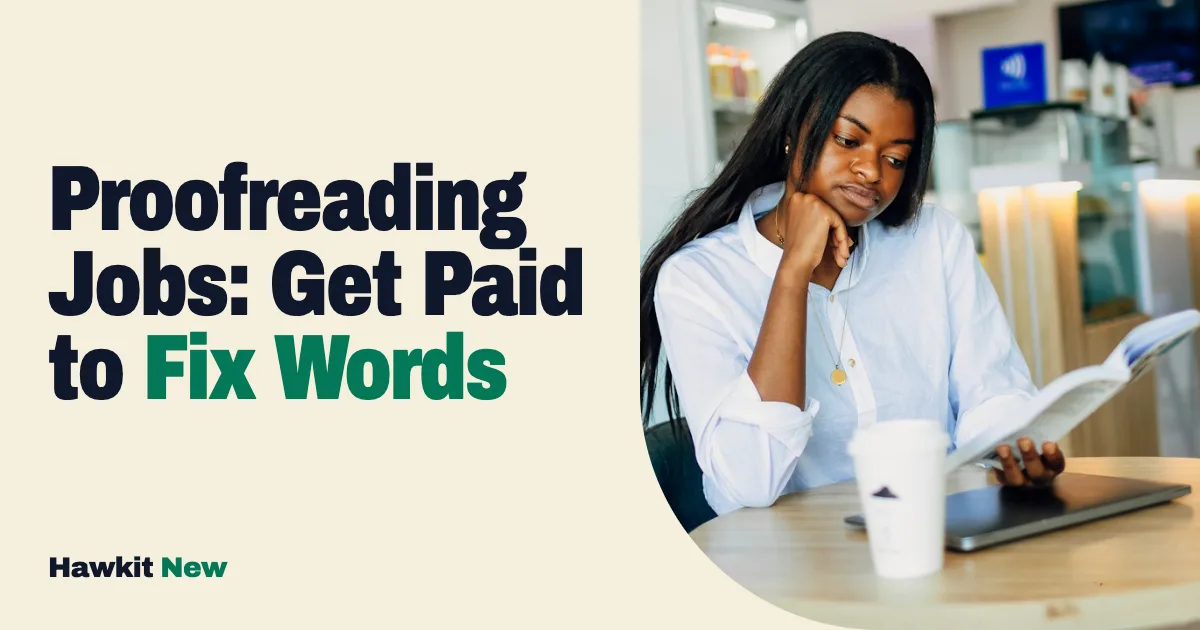
If you're the person friends send their CV to "just have a look", proofreading might pay you. Proofreading jobs in Nigeria exist, but they're rarely posted under that name. Most of the money is in freelance work, which means you have to find clients yourself.
Here's what proofreaders do, where to look, how to build proof you're good, what the pay looks like, and the scams to avoid.
What does a proofreader actually do?
A proofreader is the last pair of eyes before something goes out. You catch the mistakes nobody else saw:
- Spelling and typing errors.
- Grammar and punctuation.
- Inconsistent formatting, such as fonts, headings or dates written three different ways.
- Wrong names, numbers or repeated words.
Proofreading is not the same as editing. An editor can rewrite sentences and restructure a document. A proofreader checks that a nearly finished text is clean. In practice, many clients ask for both, and you'll sort out what they mean early on.
People who hire proofreaders include students with dissertations, authors, bloggers, companies with brochures and websites, NGOs with reports, and agencies that write for clients.
Where do you find proofreading work in Nigeria?
Here's the honest bit. When we searched on 10 November 2026, Jobberman returned 10 results for "proofreader", but none were titled proofreader. They were content, communication and admin roles, and one KYC officer listing mentioned "document proofreading and verification" in its description. MyJobMag returned none. Its page suggested browsing the Content, Editorial and Journalism category instead.
So the job boards are a poor first stop for a pure proofreading job. Better places:
- Freelance marketplaces like Upwork and Fiverr, where you create a profile and offer proofreading. Competition is heavy. We couldn't open their proofreading pages to check the current Nigeria terms and fees, so read them yourself. Our guide to freelancing on Upwork and Fiverr covers getting a first client.
- Students and postgraduates. Final-year and master's students often want a dissertation checked. University WhatsApp groups and notice boards are where those requests appear. Be clear that you fix language, not content, and don't help anyone cheat.
- Bloggers, small publishers and churches or NGOs. They publish a lot and often can't afford a full-time editor. A polite message with a sample works better than a mass blast.
- Content and writing roles. Content teams sometimes want a writer who can also proof. Read our posts on copywriting jobs in Nigeria and ghostwriting jobs in Nigeria for related paths.
- Remote boards. Some foreign publishers and editing companies hire proofreaders remotely, but country rules vary and we couldn't confirm which accept Nigerians. See remote jobs in Nigeria.
What skills and tools do you need?
- Strong grammar and punctuation. Know why a comma goes where it does, not only that it "looks right".
- A style guide. For academic work, clients often expect APA, MLA or Chicago style. Pick one and learn it.
- Attention to detail. The skill that matters most. Read slowly, then read again.
- Track changes. Learn how to use Track Changes in Microsoft Word and suggestions in Google Docs, so your client can see and accept your edits.
- A spell-check habit, not a spell-check crutch. Tools miss real-word errors like "from" for "form".
- Reliability. Meet the deadline and stay inside the scope you agreed.
How do you build proof that you're good?
Beginners get stuck here. You need samples before you have clients.
- Take a short piece of text, 500 words or so, with errors. Mark it up using Track Changes and save a before-and-after version.
- Do two or three of these in different styles: a blog post, a formal letter, a short academic paragraph.
- Offer one free or low-cost job to someone you know, and ask for a short written review.
- Put it all in one tidy PDF or a simple profile page.
Be careful with free work. One sample for a real person is fine. Weeks of unpaid "tests" for a stranger is a warning sign.
How much do proofreaders earn in Nigeria?
We can't give you a reliable rate, because we couldn't find Nigerian listings with proofreading pay. What we did see was a Nigerian freelance proofreader and editor on Hubstaff Talent in Akure with an asking rate of $35 an hour. That's what one person asks, not proof of what anyone earns, and a beginner shouldn't expect to start there.
What affects your rate:
- Who the client is. A foreign publisher pays differently from a local student.
- The state of the text. Messy writing takes longer.
- Whether you're proofreading or properly editing.
- Your samples and reviews.
Agree the price in writing before you start, whether it's per word, per page or per hour. Don't build your rent on proofreading money until you've been paid a few times.
How do you spot proofreading scams?
The barrier to entry looks low, so scammers use it. The US Federal Trade Commission's job scams guide lists the usual tricks. Watch for:
- Fees to start. "Pay ₦10,000 for software or a starter kit, then receive documents to proofread." Real clients pay you.
- The fake cheque. A client sends you more than the agreed fee and asks you to send back the difference. The cheque bounces later and you owe the bank.
- A huge job, offered instantly. No chat, no sample, no company name, just "100 pages today, payment after".
- Pay after delivery from a stranger. For a new client, ask for a deposit, or split the job into parts.
- Requests for your BVN, bank login or ID before any agreement.
Check who you're working with. Find the person or company online, ask for a short call or a clear brief, and keep your messages in writing. Our guide on how to spot fake earning sites in Nigeria adds more checks.
Is it similar to data entry?
Both reward patient people who hate mistakes. If you want a steadier office route while you build your freelance name, see data entry jobs in Nigeria.
What can you do for money while you start?
It can take weeks to land a first paying client. In that gap, small paid tasks on the side can cover data and transport.
Hawkit New is a Nigerian platform where advertisers pay people to follow pages, watch videos, review apps and post WhatsApp status adverts. You choose tasks that fit your day and withdraw to your Nigerian bank account. Rewards are set by advertisers, so what you earn depends on the tasks available. Small money, small effort, and easy to fit around practice.
So, where do you start?
This week: build two before-and-after samples, make a simple profile, and message five people or groups who publish a lot of text. Ignore anyone who asks for a fee. And while you build, create your Hawkit New account and take a few tasks on the side.
Questions
Are there proofreading jobs in Nigeria?
Yes, but few are advertised under the title 'proofreader'. Most work comes from freelance clients, publishers, students, businesses and content teams. When we searched Jobberman and MyJobMag, we found no dedicated proofreader roles.
Do I need a degree to be a proofreader?
Not always. Clients mainly want proof that you catch mistakes. A strong command of grammar, a few marked-up samples and good references can matter more than a certificate.
How much do proofreaders earn in Nigeria?
It varies widely. We couldn't find reliable listings with naira rates. One Nigerian freelancer's profile on Hubstaff Talent showed a $35 per hour asking rate, but that is what they ask, not proof of what they earn.
Where can I find proofreading clients?
Try freelancing marketplaces, student and writer groups, small publishers, bloggers, church and NGO communications teams, and your own network. Check platform terms for Nigeria before you invest time.
Do real proofreading clients charge a fee?
No. A client pays you. Fees for 'registration', 'training', 'software' or a 'starter kit' before you get any paid work are a common sign of a scam.
What can I do for money while I build my proofreading skills?
Take small paid tasks on the side. On Hawkit New, advertisers pay for simple jobs like following a page or posting a WhatsApp status advert, and you withdraw to your Nigerian bank account.